Whether to backfill a missed entry depends on how much reliable information remains. If you still remember the main foods that day, or have clues in your camera roll, packaging, or order history, add a rough entry. If only a vague impression remains the next day, leave the space blank instead of inventing dish names and gram amounts. A blank means “not recorded,” not “nothing eaten.”
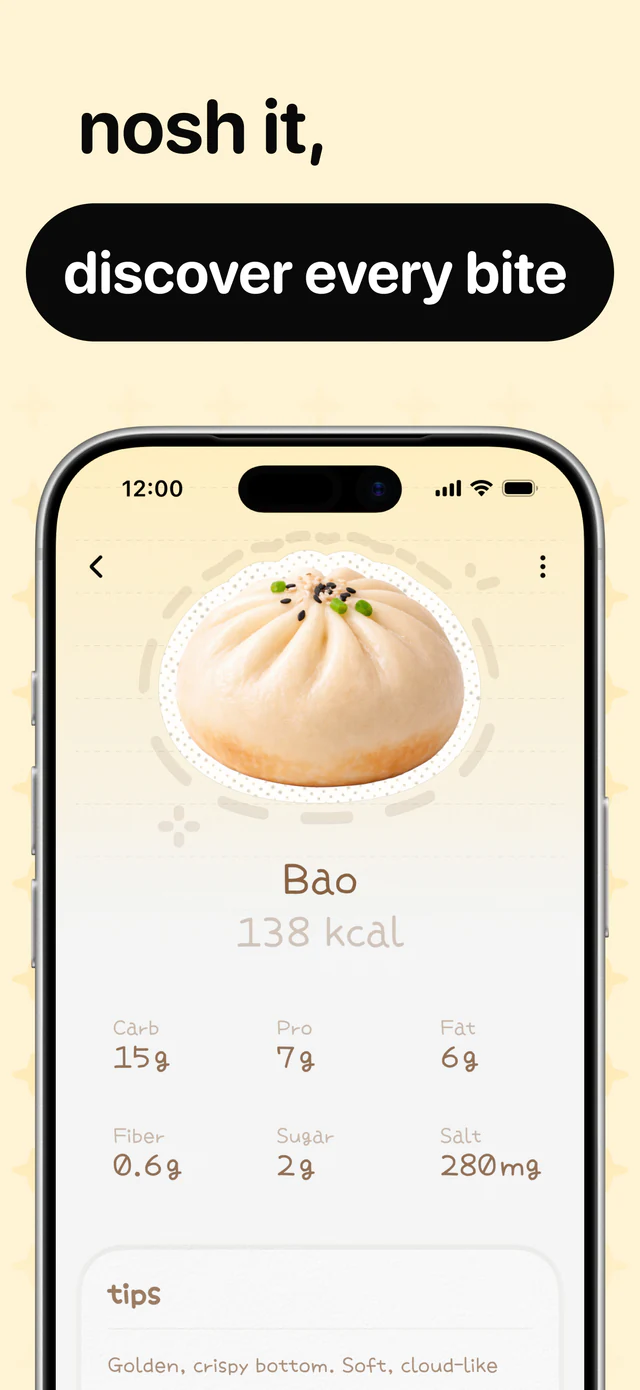
nosh lets you add missed meals with a camera-roll photo, text, or voice, and edit the log time. The goal is to preserve what you still know—not make the calendar look perfectly complete.
First separate “did not eat” from “ate but did not log”
Actually skipping breakfast and eating breakfast without recording it are different facts. One describes the meal; the other describes missing data. When both appear as the same blank space, the record can be misread later.
Keep that boundary in mind when reviewing your own log. A blank day does not have a calorie total of zero and cannot be compared directly with a complete day. If you clearly remember that dinner was missing from the record, do not conclude that you ate less because the app shows a lower number.
An honest, incomplete record is still more reliable than complete but invented data.
With direct evidence, add only what the evidence supports
If your camera roll has a lunch photo, import it. If an order confirms a dish name and size, add the main foods. If the drink bottle is still on the table, compare the label with what remains. These clues are more direct than memory alone.
But an order shows what you bought, not necessarily what you finished. A group photo of the whole table does not prove that every dish was yours. When backfilling, separate what was present from what you actually ate.
If the evidence supports only “one bowl of beef noodles, most of the broth left,” stop there. Do not guess the noodle weight, number of beef slices, and oil in the broth just to make the calculation look complete.
If you remember only the outline, record only the outline
Sometimes you remember lunch that evening without having a photo. You may still know that you ate one meat dish, one vegetable, and half a serving of rice in the cafeteria. That rough information can help explain the structure of the day later.
Add one sentence with text or voice, then move the log time to approximately the right meal. Do not discard the whole meal because the portion is uncertain. Do not give unknown details plausible-looking numbers simply to create an exact total.
Memory sets the limit. If you remember the dish, write the dish. If you remember a portion range, use the range. If you remember only “a group dinner,” let it remain a rough group-dinner entry.
When the next day is already blurry, a blank is clearer
After a night’s sleep, “I think I had noodles yesterday” may no longer be useful enough to enter. You could confuse lunch and dinner or forget drinks, snacks, and leftovers. Forced backfilling turns a clear gap into incorrect data that is harder to recognize.
Do not copy your usual breakfast into yesterday for the sake of a streak, or substitute a typical lunch for an actual memory. Knowing that the day is incomplete is itself useful information.
Start normally with the next meal. Missing one day does not invalidate the entries before it, and you do not need to compensate with excessive detail afterward.
When is it worth trying to fill the gap?
If a doctor or qualified nutrition professional asked you to keep records for condition management, investigating food and symptoms, or a clinical nutrition plan, missing information may affect decisions. Follow their instructions, backfill promptly where possible, and clearly mark what comes from memory. Photo estimates and self-recalled entries cannot replace a required recording method.
Everyday observation can be lighter. Photos, food names, estimated portions, and stickers in nosh are meant to help you revisit life, not produce an attendance sheet with no empty spaces.
The best response to a missed entry is not always “backfill” or “do not backfill.” Ask what you truly know now. Keep what you know, leave the rest blank, and continue with the next meal.