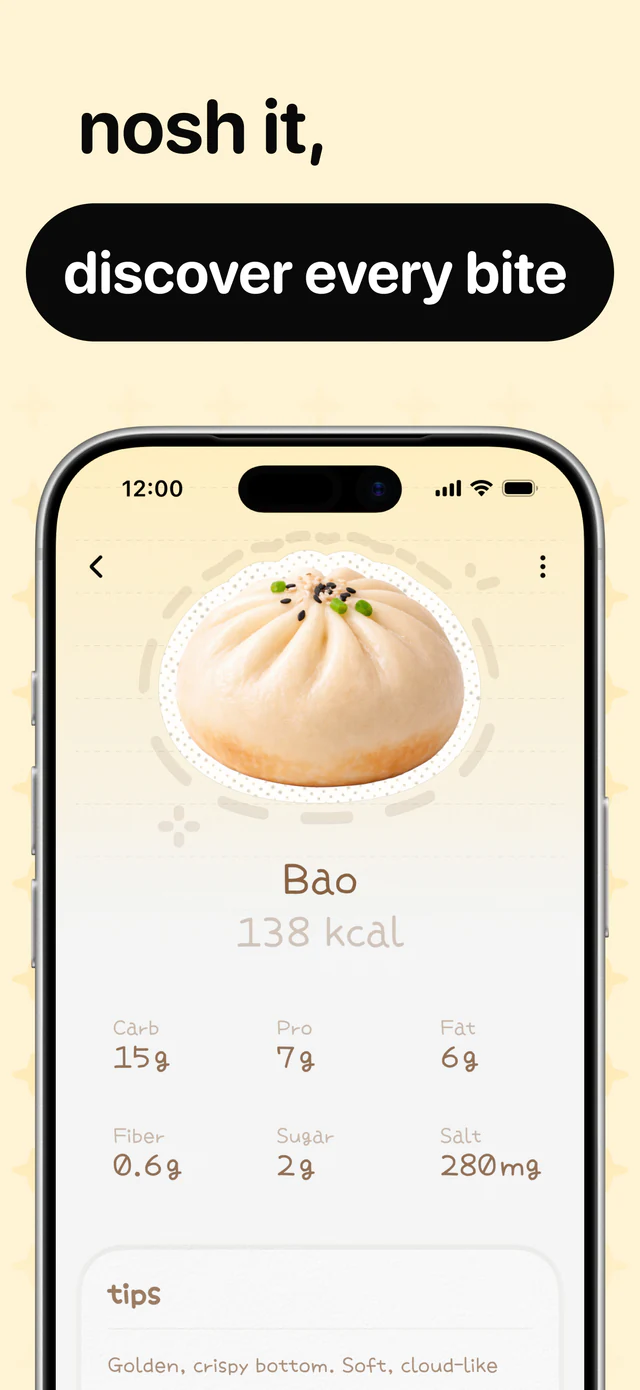
nosh currently offers four ways to log food: take a photo, import one from your camera roll, type a description, or use voice. They capture the same kind of record at different moments. Take a photo while the meal is in front of you, import one you already took, use text when the information is simple or taking a photo is awkward, and use voice when your hands are busy or you want to add something quickly.
The entry method cannot add information that was missing from the photo or description. Whichever one you use, check the food names, actual portions, and obvious omissions after the result appears.
For home cooking, cafeterias, and takeout, a photo takes the fewest steps
A plate of tomato and egg stir-fry, a cafeteria tray with several dishes, or an open takeout rice bowl can all be captured as a whole meal. One photo can preserve the staple, dishes, drink, tableware, and served portion without much interaction before you eat.
The strength of a photo is speed. Its limitations are equally clear: it cannot see exact weights, oil, sugar, fillings, or the kitchen’s recipe. Deep bowls, overlapping foods, and mixed dishes also make portions harder to judge.
A photo is best for creating a first draft of the whole meal, followed by corrections to the main foods and any obvious portion errors. It cannot turn a complex meal into the equivalent of a weighed result.
If you already took a picture, import it from your camera roll
If you used the system camera during the meal and remembered the log later, you do not need to arrange the plate again. Import the original photo to preserve how the meal looked at the time.
Camera-roll import is especially useful at group meals, while traveling, or whenever you do not want to open an app at the table. Choose a photo taken as close as possible to the start of the meal and showing the whole plate. If it captures only part of the meal, food that is already half eaten, or one round of several, add what is missing and correct the portion you actually ate.
The photo’s timestamp can help you remember which meal it was, but the final log should still reflect what you actually ate.
Use text when the food is simple or taking a photo is inconvenient
Without a photo, you can write “two eggs and one unsweetened soy milk for breakfast” or “a small bag of nuts in the afternoon.” Text works well when the food names are clear, the amounts are easy to describe, or raising a phone to take a picture would feel awkward.
A useful text entry does not need to read like a recipe. Prioritize the main foods, natural quantities, cup or bowl size, and anything clearly left over. For packaged food with a nutrition label, compare the name, size, and proportion eaten with the label, then correct the estimate if needed.
Text can only use what you include. If you omit a drink, side, or portion, the system cannot recover the real detail from outside the sentence.
When there is no photo and your hands are busy, use voice to save the outline
If you remember only after leaving the restaurant, or your hands are wet while cooking, say: “One bowl of beef noodles for lunch, half the broth left,” or “Two slices of toast, one egg, and black coffee for breakfast.” Voice turns a recent memory into a log before you have to reconstruct the entire meal that evening.
Voice does not make unknown details accurate. If you leave out the portion, it still has to be estimated. If you say only “coffee” instead of “latte,” the milk and cup size disappear. Include the main foods, natural quantities, and clear leftovers. You do not need to dictate a laboratory recipe.
The most practical choice is often to mix the four
Photograph a takeout rice bowl at the table, import a group-meal photo later, add a simple breakfast with text, and use voice when your hands are full while cooking. If an important ingredient has a measured weight or package label, use that direct information to correct the name, calories, and portion.
You do not need one permanent logging method. Start with whichever option is closest to the meal, easiest to capture in the moment, and easiest to review later.