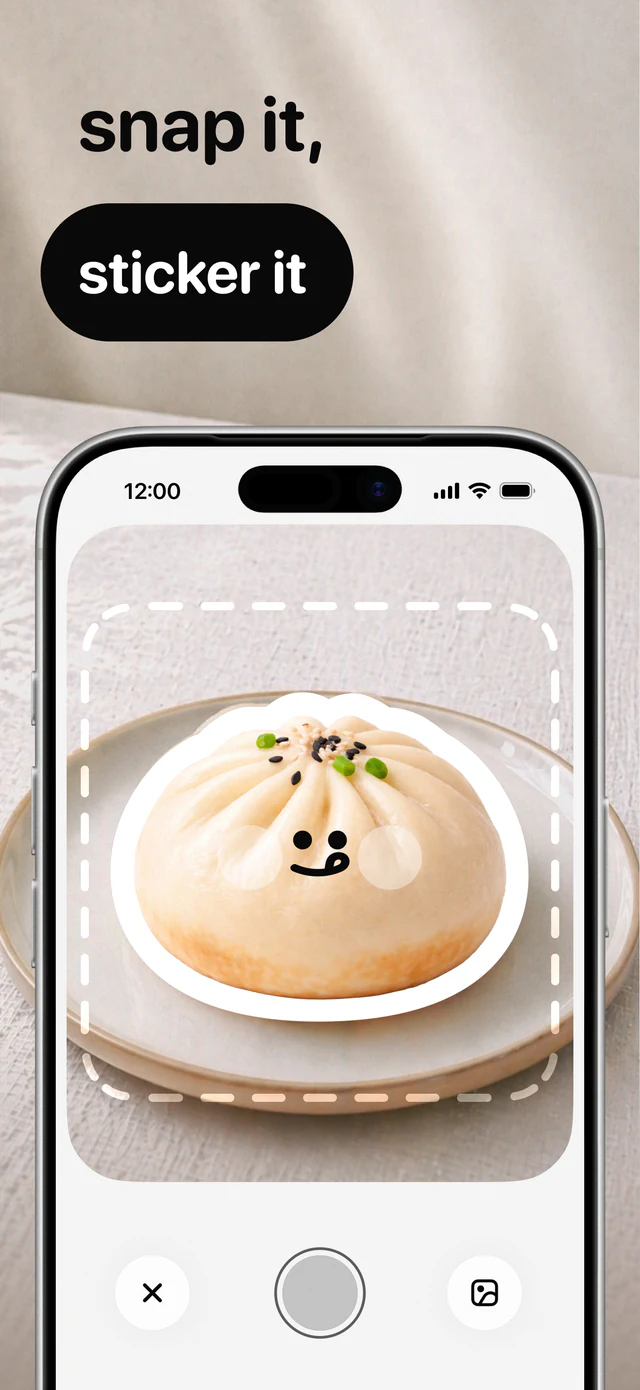
A regular food log often saves a meal as a dish name, portion, and calorie count. A food sticker adds an immediate visual image of the food alongside that information. It changes how a record is seen and remembered. It does not automatically improve recognition accuracy, and it is not a new way to calculate nutrition.
In nosh, recognized food becomes a sticker after you take a photo. The same entry also shows its name, estimated portion, calories, nutrition information, and meal tips. The sticker and the data belong to one record, but each does a different job.
A regular log is a list; a sticker is a visual bookmark
“Beef noodles, about one bowl, 650 calories” is a clear text entry. A few days later, it tells you what you ate, but it may not immediately bring back the bowl, the toppings, or how the meal looked.
A food sticker puts the image of the food first. You do not have to read through a row of fields to recognize a coffee, a plate of dumplings, or a birthday cake. When looking back, an image often works more like an entry point than an ID or total does.
The sticker is not meant to replace the food name. Similar-looking foods still need the correct name, and hidden ingredients still require other information.
A sticker does not change the limits of a photo estimate
Making food look cute does not suddenly tell the system how many grams it weighs. Camera angle, container depth, overlapping food, and oil or sugar outside the frame still affect recognition and portion estimates.
If the dish name is wrong or the portion is implausible, correct the entry first. A sticker that resembles the dish does not make the data below it accurate. The reverse is also true: a sticker that does not look quite right does not necessarily mean the nutrition data is wrong.
Visual presentation and nutrition estimation are related, but they are not the same capability.
It makes completing a log feel a little like collecting
A traditional calorie log may leave only a number and a progress bar when the entry is done. A food sticker turns the result into something you might want to look at again: eggs at breakfast, a rice bowl at lunch, and strawberries in the evening each keep their own shape.
In its public description, nosh calls this “snap and stick” and “collecting a food journal.” The point is not to grade a meal. It is to give an ordinary meal a reason to be kept.
That sense of collecting can make logging feel less like filing an expense report, but it will not make everyone more consistent. It is an experience choice, not a promise of better health.
When to look at the sticker—and when to look at the data
When you want to remember what you ate recently, stickers are faster to scan. To check portions, calories, and nutrition information, return to the fields and their sources. If packaged food has a clear nutrition label, the label does not lose priority just because a sticker was created.
Strict nutrition management still requires weighing, known recipes, or the method specified by a professional. Stickers are for looking back on everyday life; they do not provide the precision of a clinical record.
One food entry can support two ways of reading: see the food first, then inspect the numbers. The first helps you recognize your life; the second helps you understand your approximate intake.
What makes nosh different is more than adding an image to a list
nosh starts with food in a photo or your camera roll, creates a sticker, and then provides names, nutrition information, and tips. When there is no photo, you can add an entry with text or voice. It is closer to a food journal that can do calculations than an app that only adds up daily calories.
A regular log answers, “What is the data for this meal?” A food sticker adds another answer: “What did this meal look like?” Together, they let a record support calculation while still feeling like a meal you actually ate.